Continuity of Access: Designing for the Day the Password Keeper Is Gone
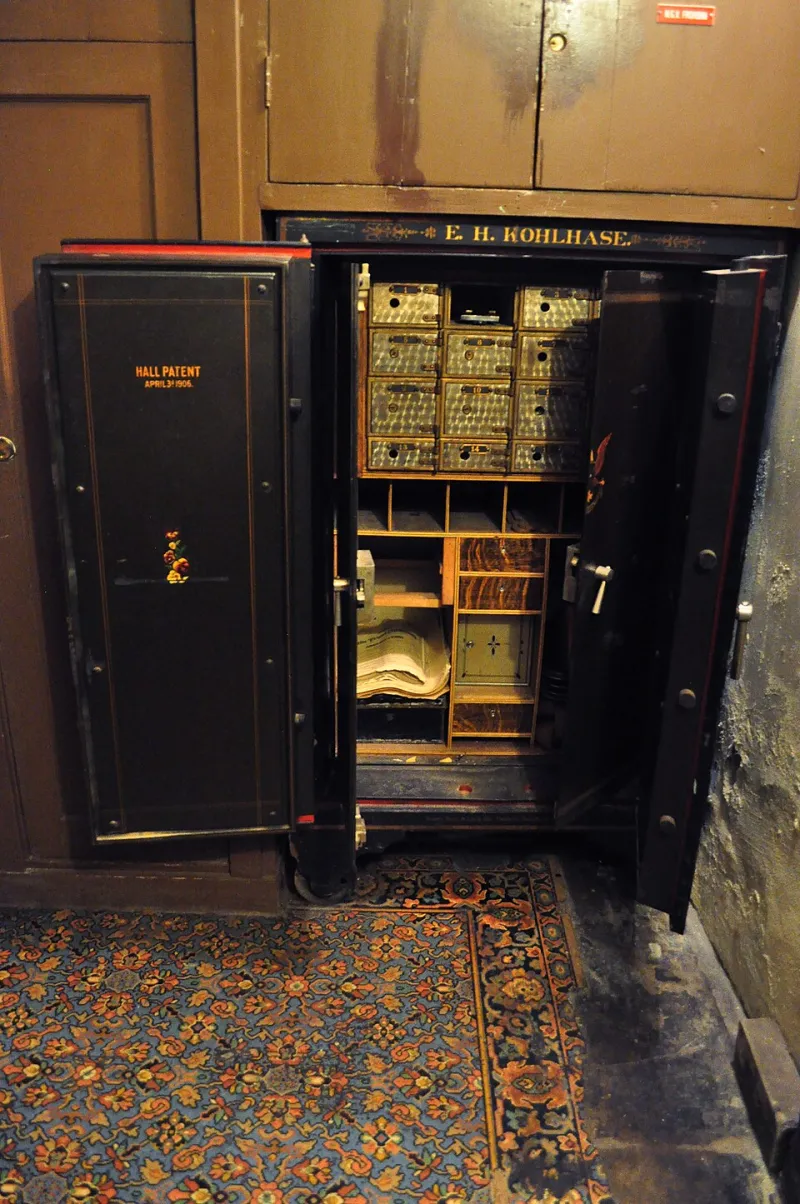
Photo: Joe Mabel, CC BY-SA 4.0, via Wikimedia Commons
Every organization of a certain size has one person who knows the passwords. Sometimes it is the office manager, sometimes the owner, sometimes a contractor who set up the network in a previous decade and still answers texts. The arrangement works, which is precisely why it survives long past the point where it should.
It works until that person takes a two-week vacation to a place with poor reception, accepts a job elsewhere, or is hospitalized on a Tuesday. At that moment, a business discovers that its access control was never designed; it accumulated.
The goal here is not secrecy. Secrecy is easy and often counterproductive. The goal is continuity: the ability for the right people to reach the right systems on the worst possible day, and the ability to remove that reach cleanly when someone leaves.
The single point of failure is a person
The uncomfortable truth is that a shared password in a desk drawer is more resilient than a password that lives only in one employee's memory, and both are worse than a properly managed vault. Memory has no backup and no audit trail. When it walks out the door, it takes the recovery path with it.
Any access arrangement should be judged by a single test: if the person who holds the most credentials vanished tomorrow, could two other people keep the business running for a week without calling a lawyer?
Passkeys are excellent, and they do not solve this
Passkeys are a genuine improvement. They resist phishing, they remove the weakest link in most account takeovers, and they are increasingly well supported by the major platforms a small business already uses. Wherever a vendor offers them, they should be enabled.
What they do not do is solve custody. A passkey bound to one person's phone is, from the organization's point of view, another single point of failure with better cryptography. The device is lost, the phone is replaced without migration, the person is unreachable — and the account is as closed as it would have been under a password.
So the answer is not to avoid passkeys. It is to pair them with organizational custody: at least two enrolled devices, held by two different people, with a documented path to re-enrollment that does not depend on the missing person's phone.
One vault, two custodians
Every business with more than a handful of systems should keep credentials in a shared password manager designed for teams — not in a spreadsheet, not in a note-taking app, and emphatically not in email.
The specific product matters less than three properties. First, individual accounts rather than a shared master login, so that every access is attributable. Second, a documented recovery method for the vault itself, stored separately from the vault. Third, at least two administrators, held by two people who do not sit in the same car when they commute.
The second custodian is the whole point. A vault with one administrator is a memory with a nicer interface.
Keep exactly one break-glass account
There is a category of credential that must not live only in the vault: the account that lets you rebuild access to the vault. This is the break-glass account, and it should be deliberately boring and deliberately rare.
A workable design: one administrative account, credentials sealed in a physical envelope in a safe or a safe-deposit box, with a tamper-evident seal and a log sheet. Use is expected to be a minor event — someone writes the date, the reason, and the initials. After use, the credential is rotated and resealed within a week.
One such account is a safety net. Four are a second shadow system nobody tracks. If you find yourself needing a fifth, the real problem is somewhere else.
Offboarding needs a witness, not a reminder
Most access breaches in small firms are not attacks. They are leftovers: the contractor whose account stayed active for a year, the former employee whose mailbox forward was never removed, the vendor's shared login that is still in circulation.
The fix is procedural and unglamorous. Before the last day, produce a written inventory of every credential the departing person holds, revoke each one, rotate anything that was shared rather than personal, and have a second person confirm the revocations line by line. That confirmation is the witness step, and it is what separates a checklist that works from one that is filled out from memory.
Two habits make this bearable. Maintain a registry that ties each system to its owner and its custodian, updated when systems are added rather than when people leave. And schedule a quarterly review of the registry, thirty minutes long, in which someone asks aloud who holds each item and what happens if they are unavailable.
Rehearse the absence
The only convincing evidence that access survives a person is a rehearsal. Once a year, pick a system, pick a person who would normally handle it, and have someone else perform a routine task — reset a mailbox, add a user, retrieve an invoice — using only the documented vault and the written procedures.
If the task takes ten minutes, you have continuity. If it takes a phone call and an hour of improvisation, you have found the next thing to fix, and you have found it at a convenient time.
Access control is often described as a defense against attackers. For a business of thirty or three hundred people, it is more often a defense against ordinary absence. Design for the vacation, the resignation, and the hospital stay, and the security posture tends to improve as a side effect.